博文

Phenolic Insulation Boards in Power Plants: Improving Thermal Efficiency

图片
  Phenolic insulation boards play a crucial role in enhancing thermal efficiency in power plants. By providing excellent thermal resistance, they help reduce energy loss, improve system performance, and minimize operational costs. Understanding how these boards function and their benefits can significantly impact energy conservation strategies. 2. What are Phenolic Insulation Boards? Phenolic insulation boards are structural materials known for their excellent thermal performance and low thermal conductivity. These boards contain phenolic resin, which makes them a preferred choice in power plant applications. Below are key features: 3. Benefits of Phenolic Insulation in Power Plants Implementing phenolic insulation boards in power plants offers various advantages. Here are some of the crucial benefits contributing to thermal efficiency: 3.1 Energy Conservation Utilizing phenolic boards reduces energy consumption considerably, leading to lower operational costs. Case studies show u...

What is citicoline sodium used for?

图片
   Unlocking the Potential: The Uses of   Citicoline Sodium In a fast-paced world that demands peak cognitive performance, the search for substances that enhance brain function and promote overall mental well-being is unceasing. Among the compounds that have emerged as potential cognitive enhancers, citicoline sodium stands out for its diverse applications and promising benefits. In this article, we delve into the multifaceted uses of citicoline sodium and explore its impact on brain health and beyond. The Basics of Citicoline Sodium: Citicoline, also known as cytidine 5'-diphosphocholine (CDP-choline), is a naturally occurring compound found in the cells of human and animal tissues. It plays a vital role in the synthesis of cell membranes and serves as a precursor to two essential molecules: choline and cytidine. These molecules are crucial for the synthesis of neurotransmitters, such as acetylcholine, and for DNA synthesis, respectively. Citicoline sodium is the salt fo...

Applications and Significance of C3F6 Industrial Gas

图片
  C3F6 hexafluoropropylene , stands out as a crucial compound in the industrial landscape. With its unique chemical properties, this industrial-grade substance finds diverse applications across various sectors, contributing significantly to technological advancements and process efficiencies. In this exploration, we'll dissect the uses and significance of C3F6 in industrial settings. Chemical Composition and Properties C3F6 is a fluorocarbon alkene with the molecular formula C3F6. Its distinctive feature lies in its fully fluorinated structure, rendering it highly stable and chemically inert. This inertness, coupled with its low boiling point and excellent electrical insulating properties, makes C3F6 an ideal candidate for a range of industrial applications. Industrial Applications 1. Polymer Production C3F6 serves as a key building block in the production of high-performance polymers. Its inclusion in polymerization processes results in the creation of fluoropolymer materials reno...

What Does Copper Peptide Do?

图片
  Copper peptides, also known as GHK-Cu peptides, are a type of natural peptide compound that consists of a copper ion attached to a peptide chain. These peptides have gained significant attention in recent years due to their various applications and potential benefits in skin care, wound healing, and tissue repair. In this article, we will delve into the applications and   benefits of copper peptide , exploring the ways it can positively impact our well-being.   Applications of Copper Peptide   1. Skin Regeneration and Anti-Aging   Copper peptide has garnered immense interest in the field of dermatology due to its ability to enhance skin regeneration and fight against signs of aging. It stimulates the synthesis of collagen, a protein that is vital for maintaining the elasticity and firmness of the skin. By promoting collagen production, copper peptide helps reduce the appearance of wrinkles, fine lines, and improves overall skin texture.   Moreover, copper...

Understanding the Safety and Side Effects of PROTAC-Based Therapie

图片
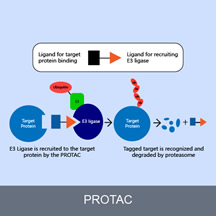
As   PROTACs (Proteolysis Targeting Chimeras)   emerge as a promising frontier in targeted drug therapy, it's crucial to not only acknowledge their potential but also understand the safety profile and potential side effects associated with these innovative molecules. In this article, we'll explore the safety considerations and side effects of PROTAC-based therapies to provide a comprehensive understanding of their impact on patients and the future of medicine. Safety Considerations for PROTAC-Based Therapies Precision Targeting: One of the primary advantages of PROTACs is their precision in targeting specific disease-associated proteins. This precision reduces the risk of affecting non-target proteins, minimizing adverse effects. Reduced Off-Target Effects: Compared to traditional drugs, PROTACs are designed to reduce off-target effects, meaning they are less likely to impact healthy cells and tissues. Potential for Lower Dosing: The specificity of PROTACs may allow for lower ...

WHAT ARE SURFACTANTS AND HOW DO THEY WORK

图片
  Surfactants   are some of the most versatile products in the chemical industry. They are used in every industry, from household detergents to drilling mud, from food to pharmaceuticals. Basics of surfactants Surfactants are amphiphilic molecules with hydrophobic and hydrophilic parts. The hydrophobic tails are hydrocarbons, fluorocarbons or siloxanes. Surfactants are usually classified according to their polar heads, since the hydrophobic tails are usually similar. If the head group has no charge, the surfactant is referred to as a  Nonionic Surfactant . If the head group has a negative or positive charge, it is referred to as anionic or cationic, respectively. If it contains both positive and negative charges, the surfactant is called amphoteric. Anionic Surfactants By far, nonionic and  Anionic Surfactants  are the most used surfactant types in industry. Anionic surfactants are particularly suitable for cleaning products such as laundry detergents and shampo...

Accelerate Your Research with Custom Organic Synthesis Services

图片
Organic synthesis   is the foundation of modern chemistry, enabling the creation of diverse and complex molecules essential for various industries, including pharmaceuticals, agrochemicals, and materials science. While standard chemical compounds are readily available, researchers often encounter unique challenges that demand custom-made molecules. In such cases, Custom Organic Synthesis Services come to the rescue, providing tailored solutions to accelerate research and innovation. What is Custom Organic Synthesis? Custom Organic Synthesis involves the design and creation of organic compounds according to specific requirements provided by researchers and industries. These services bridge the gap between off-the-shelf chemicals and the need for novel, tailored molecules. The synthesis process is meticulously carried out by skilled chemists, following a series of reactions and purification steps to achieve the desired product. The Benefits of  Custom Organic Synthesis Services ...

The Remarkable Journey of the Acetic Acid Plant

图片
  Acetic acid, a simple yet indispensable chemical compound, plays a significant role in various industries, from food and beverages to textiles and pharmaceuticals. The production of acetic acid has come a long way since its discovery in vinegar, and today, the   Acetic Acid Plant   stands as a testament to modern chemical engineering prowess. This article explores the evolution of acetic acid production, delves into the inner workings of the Acetic Acid Plant, and highlights its relevance across diverse sectors. Historical Roots and Modern Applications Acetic acid, also known as ethanoic acid, has been known to humanity for centuries due to its presence in vinegar, a common household product. The compound's distinct aroma and acidic properties have made it a staple in culinary practices and food preservation. However, the applications of acetic acid have expanded far beyond the kitchen. In modern times, acetic acid serves as a vital building block for the production of ...

Tert-Butyl 4-Bromobutanoate: A Versatile Compound for Organic Synthesis

图片
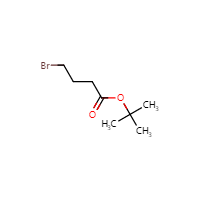
Introduction Tert-Butyl 4-Bromobutanoate is a chemical compound that finds extensive use in organic synthesis. This compound belongs to the ester family and possesses unique characteristics that make it a valuable building block for the preparation of various organic compounds. This article explores the properties, synthesis methods, and diverse applications of tert-Butyl 4-Bromobutanoate in the field of organic chemistry. Properties and Structure Tert-Butyl 4-Bromobutanoate, also known as t-Butyl 4-Bromobutanoate or 4-Bromo-2-methylpropanoic acid tert-butyl ester, has the molecular formula C8H15BrO2. Its structure consists of a butanoate (C4H7O2) group attached to a tert-butyl (C4H9) group through an ester linkage. The presence of the bromine atom (Br) adds further reactivity and versatility to the compound. Synthesis Methods Several methods are available for the synthesis of tert-Butyl 4-Bromobutanoate. One common approach involves the reaction of tert-butyl alcohol with 4-bromobuta...

Benzofurans: Exploring a Fascinating Class of Compounds

图片
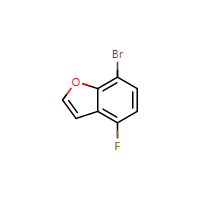
Benzofurans   are a captivating group of aromatic compounds that have gained significant attention in the fields of chemistry, pharmaceuticals, and materials science. With their unique molecular structures and versatile properties, benzofurans have become valuable building blocks for the synthesis of various functional molecules. In this article, we will delve into the world of benzofurans, exploring their characteristics, applications, and the role of a reliable Benzofurans manufacturer in their production. Structure and Properties Benzofurans are comprised of a fused benzene ring and furan ring, forming a bicyclic structure. This arrangement imparts distinctive chemical and physical properties to these compounds. The presence of both aromatic and heterocyclic moieties contributes to their aromaticity, making benzofurans stable and highly conjugated. The substitution pattern on the benzene and furan rings further influences their reactivity and biological activities. One of the no...

What is the Difference Between APIs and Intermediates?

图片
APIs   are substances that are used in the production of a finished pharmaceutical product but are not themselves the final product. They are intermediate compounds that are used in the synthesis of a drug and are usually transformed into the final drug product through chemical reactions. APIs are a key component of many pharmaceutical products and play a vital role in the effectiveness and safety of these products.   APIs are  intermediates  that have pharmacological activity and are used in the production of a final drug product. They may be used as such or may be further transformed into the final API. APIs are typically highly pure and are carefully controlled during the manufacturing process to ensure consistent quality.   intermediates   Intermediates, on the other hand, can refer to any compound that is produced during the synthesis of a chemical product and is subsequently converted into another compound.  They are not necessarily related to th...